Top CRM for Asset Managers

CRM for asset managers: quick overview
A CRM (Customer Relationship Management) system helps asset managers organize client data, automate workflows, and track portfolio performance more effectively. Without one, firms face inefficiencies, compliance risks, and poor client engagement. The right CRM supports relationship-building, investment insights, and scalable growth.
Key points:
Challenges without CRM:
-
Disorganized client data across tools
-
Missed follow-ups and manual tasks
-
Compliance tracking is inconsistent
Benefits of using a CRM:
-
Centralized view of client and portfolio data
-
Automation improves productivity and response time
-
Supports compliance with regulations like PIPEDA/GDPR
Top features to look for:
-
Client relationship tracking and segmentation
-
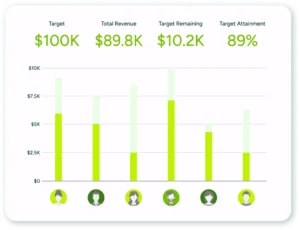
Portfolio performance analytics and dashboards
-
Automation and tool integrations
Why asset managers need a CRM
Challenges in asset management without CRM
Managing assets without a centralized system is like navigating markets without a strategy: it’s risky, inefficient, and prone to costly errors. Asset managers often deal with multiple client accounts, performance metrics, and compliance requirements, all while maintaining personal relationships with high-net-worth individuals and institutional clients. Without a CRM, this information is scattered across spreadsheets, email inboxes, and disconnected tools, making it difficult to maintain consistency or scale operations.
Common pain points include missed follow-ups, lack of real-time visibility into portfolios, limited collaboration between teams, and difficulty staying compliant with regulations like PIPEDA or GDPR. These challenges don’t just slow down day-to-day work; they can impact client satisfaction and firm reputation over time. In fast-paced financial environments, even small communication lapses or data errors can lead to missed opportunities or regulatory scrutiny. As firms grow and client demands increase, these inefficiencies become harder to ignore. That’s why CRM tools are no longer a nice-to-have; they’re foundational.
Benefits of CRM for client and portfolio management
A dedicated CRM designed for asset managers brings order to the complexity. It acts as a central hub where client interactions, investment details, and compliance notes are organized and accessible. This makes it easier to deliver personalized service, respond quickly to client inquiries, and make informed decisions based on complete data sets.
With built-in automation, CRMs help eliminate repetitive admin tasks like meeting reminders, portfolio updates, or client onboarding steps. They also enhance team collaboration by giving everyone access to the same information, improving response times and transparency.
For portfolio tracking, modern CRM systems integrate with performance reporting tools and financial planning software, offering a 360-degree view of each client’s financial picture. Managers can identify trends, compare asset allocations, and generate insights in real time, all while maintaining a high-touch relationship with clients. In short, CRMs empower asset managers to work more efficiently, stay compliant, and deliver a level of service that builds long-term trust.
Key features to look for in an asset management CRM
Not all CRMs are built the same, especially when it comes to asset management. While general-purpose platforms may offer basic contact management, asset managers require deeper functionality tailored to the financial services sector. The ideal CRM should go beyond client tracking and support the full investment lifecycle, compliance requirements, and data security protocols. Below are the essential features to look for when evaluating CRM software for asset management firms:
Client data and relationship tracking
At the heart of any CRM is its ability to store and organize client information, but for asset managers, this means more than just contact details. A high-quality CRM should capture detailed financial profiles, communication history, investor preferences, and even family relationships or succession planning details.
Look for CRMs that offer customizable fields, activity logs, and relationship mapping tools. These features allow firms to develop a full picture of each client’s financial journey and proactively respond to changing needs. With advanced search and filtering, advisors can also segment their clients and tailor their services to specific groups, such as retirees, institutional investors, or high-net-worth individuals.
Portfolio and performance analytics
Tracking portfolios manually across various platforms is time-consuming and error-prone. Asset management CRMs should integrate with portfolio management software or come with built-in tools that provide real-time insights into investment performance, asset allocation, and risk exposure.
Dashboards that visualize portfolio trends, performance against benchmarks, and key performance indicators (KPIs) help managers make faster, more informed decisions. Ideally, your CRM should allow you to link client goals with investment strategies, enabling a more holistic and client-centric approach to portfolio management.
Automation and integration capabilities
Repetitive administrative tasks like appointment scheduling, quarterly reporting, or follow-up emails can eat into your team’s productivity. That’s why automation is a must-have feature in any CRM for asset managers. Automated workflows help reduce manual input, ensure consistency across your processes, and allow your team to focus on high-impact activities.
Additionally, integration is key. Your CRM should work well with the tools your firm already uses, such as Microsoft Outlook, DocuSign, performance reporting platforms, and compliance tracking systems. APIs and native integrations can expand your CRM’s utility while minimizing the need for duplicate data entry or switching between tools.
Top CRM tools for asset managers in 2025
Maximizer CRM
Maximizer CRM is a top-tier solution for financial professionals, offering specialized tools that meet the nuanced demands of asset management firms. Known for its client-centric approach, Maximizer enables users to track the full client lifecycle from prospecting and onboarding to long-term account growth all within a secure, Canadian-hosted environment.
With customizable dashboards, portfolio and policy tracking, and powerful automation features, Maximizer adapts to the way your firm works. Teams can manage compliance tasks, assign workflows, and view account performance in real time, making it a strong contender for both independent advisors and larger firms.
Key Features:
-
Client Lifecycle Management: Store client profiles, investment goals, and relationship history
-
Sales & Task Automation: Assign tasks, automate follow-ups, and monitor service delivery
-
Marketing Campaigns: Launch targeted campaigns and track engagement directly from the CRM
-
Data Security: Canadian data hosting with PIPEDA compliance and strict access controls
Pricing:
-
Base Edition: $89/month
-
Sales Leader: $100/month
-
Financial Advisor Edition: $100/month
Usability:
Maximizer offers a clean, highly customizable interface that supports mobile access and team collaboration. Its modular design ensures that firms can scale the platform as they grow without needing to switch tools or pay for unnecessary features.
Why it’s great for asset managers:
Maximizer is tailored for financial professionals who value control, compliance, and a unified view of their clients. It combines relationship management, marketing, and reporting into one powerful system, perfect for firms that want to elevate client service while remaining agile.
Salesforce Financial Services Cloud
Salesforce Financial Services Cloud is purpose-built for financial professionals, making it a standout option for asset management firms in 2025. Designed to serve both wealth managers and institutional investment teams, this CRM offers a comprehensive suite of tools for managing relationships, tracking performance, and maintaining compliance.
Salesforce stands out for its deep customization and scalability, which allows large firms to tailor the platform to their specific workflows. With AI-powered features like Salesforce Einstein, firms can predict client needs, surface cross-sell opportunities, and identify trends within their portfolios. This level of insight can significantly improve decision-making and client engagement.
Its advanced compliance tools help firms stay on top of regulations such as PIPEDA and GDPR, while integration options let teams connect their CRM with popular financial planning, reporting, and analytics platforms.
Key Features:
-
Client Relationship Modeling: View household connections, track financial goals, and manage multi-tier client profiles
-
Einstein AI Insights: Get real-time recommendations for next-best actions and portfolio adjustments
-
Regulatory Support: Includes built-in compliance templates and activity monitoring
-
Third-party Integrations: Sync with performance analytics tools, custodial platforms, and communication channels
Pricing:
-
Starter Suite: $25/user/month
-
Pro Suite: $100/user/month
-
Enterprise Suite: $165/user/month
Usability:
Salesforce is robust and ideal for firms with dedicated IT or admin support. The learning curve is steeper than other tools, but once configured, it offers powerful capabilities that support advanced asset management operations.
Why it’s great for asset managers:
For enterprise-level firms managing large portfolios and complex client relationships, Salesforce offers unmatched flexibility and depth. Its analytics and AI tools give asset managers a strategic advantage, while its compliance features help mitigate risk.
Microsoft Dynamics 365
Microsoft Dynamics 365 brings together CRM, ERP, and business intelligence into one powerful ecosystem. For asset managers seeking enterprise-grade tools with familiar Microsoft integrations, Dynamics offers a smooth experience across Outlook, Excel, Teams, and more.
The platform is highly customizable, making it ideal for firms that need to adapt workflows to their unique client servicing models. Features like customer insights and financial forecasting make it easier to personalize engagement and track long-term investment goals. Microsoft’s strong security posture and data compliance tools are another plus for firms operating under strict regulatory environments. And with Power BI built in, teams gain access to real-time dashboards and investment analytics.
Key Features:
-
Unified Data Environment: Centralizes financial, customer, and compliance data
-
Embedded Analytics: Power BI for real-time investment and client reporting
-
Custom Workflows: Build investment-specific processes using Microsoft Power Platform
-
Integration with Office Suite: Deep connections with Outlook, Excel, and Teams
Pricing:
-
Custom pricing options available
Usability:
If your team already works within the Microsoft ecosystem, Dynamics 365 will feel intuitive. It offers strong functionality out of the box, with room for deep customization through Microsoft’s developer tools.
Why it’s great for asset managers:
Firms looking for deep integration with Microsoft products and flexible workflow automation will find Dynamics 365 a great fit. It supports a wide range of asset management activities, from relationship-building to performance tracking, within a scalable platform.
HubSpot CRM
HubSpot CRM is a popular choice among small to mid-sized firms for its user-friendly design and flexible pricing structure. While it wasn’t built specifically for financial services, its extensive customization and integration options make it a practical choice for asset managers looking to get started quickly.
The platform centralizes client interactions, sales activities, and marketing automation and allows investment professionals to build tailored dashboards for tracking investor communications and onboarding processes. Though advanced portfolio features are limited, HubSpot integrates with tools like Wealthbox and reporting platforms for more specialized functions.
Key Features:
-
Contact & Deal Management: Organize investor profiles and track communication touchpoints
-
Pipeline Automation: Set follow-up reminders and trigger alerts based on client actions
-
Custom Reporting: Build dashboards to monitor team activity and client engagement metrics
-
Marketing Tools: Create email campaigns and segment audiences for personalized communication
Pricing:
-
Free Plan: $0/month
-
Professional: $1,034/month
-
Enterprise: $4,700/month
Usability:
HubSpot is one of the most intuitive CRMs on the market. It’s easy to onboard new users, and firms can start with the free plan and scale as their needs grow. However, more advanced features often require jumping to higher-priced tiers.
Why it’s great for asset managers:
Smaller firms or new asset managers benefit from HubSpot’s ease of use and strong marketing capabilities. It’s an excellent entry point into the world of CRMs, especially for those focused on building client relationships and automating communications.
SatuitCRM
SatuitCRM is built specifically for asset managers, wealth advisors, and institutional sales teams. It focuses on improving the complex data workflows that investment firms face, offering tools for onboarding, reporting, and compliance tracking within one platform. Unlike broader CRMs, Satuit zeroes in on the financial vertical, offering pre-built templates and modules suited for investor relations and portfolio reporting. Its ability to manage RFPs, track sales cycles, and support multi-tier client structures makes it an efficient solution for mid- to large-size asset management firms.
Key Features:
-
Investor Onboarding: Manage documentation, approvals, and KYC processes in one place
-
Sales Pipeline Management: Track opportunities and team performance across channels
-
Custom Workflows: Build templates for fund launches, performance updates, and compliance reviews
-
Client Reporting: Deliver personalized investment reports and communications
Pricing:
- Satuit Essential: $150/month
- Satuit Premium: $200/month
- Satuit Enterprise: $300/month
Usability:
SatuitCRM is a niche product that requires some setup but offers long-term value for firms focused on institutional relationships. It’s especially useful for teams managing a wide variety of funds or investor types.
Why it’s great for asset managers:
For firms that want a CRM built specifically for asset management with minimal customization needed, SatuitCRM is a smart choice. Its investor-focused workflows and reporting tools help ensure that nothing falls through the cracks while boosting operational efficiency.
How to choose the right CRM for your asset management firm
Assessing your firm’s size and needs
The first step in selecting a CRM is understanding your firm’s structure, client base, and long-term goals. Are you a solo advisor managing a high-net-worth portfolio or part of a mid-sized team handling both institutional and retail investors? Different firms have very different requirements, and selecting a CRM that aligns with your operational model is key.
Smaller firms may benefit from intuitive, plug-and-play platforms that prioritize relationship tracking and light automation. On the other hand, larger firms often require enterprise-grade features such as custom workflow creation, deep analytics, permission-based user roles, and advanced integrations with financial platforms.
Beyond firm size, consider how many daily users will rely on the system and whether those users need mobile access, team collaboration tools, or real-time data visualization. Define the top three problems your CRM needs to solve, such as reporting inefficiencies, compliance tracking, or client onboarding and use these to filter your options.
Evaluating integration and scalability
Asset managers rarely work in isolation. Most firms rely on a host of other platforms’ performance tracking tools, custodial systems, compliance software, and even marketing suites. The best CRM for your firm will integrate with your existing tech stack and reduce the need to manually copy data between systems.
Look for platforms with strong API support, native integrations with industry tools, and flexibility to connect with custom apps or data sources. If you’re already invested in an ecosystem like Microsoft, Salesforce, or Google Workspace, make sure your CRM supports deep connections with those services.
Scalability is another major factor. Will the CRM still serve your firm when you double your AUM or expand into new markets? Make sure your provider offers flexible pricing tiers, user management tools, and feature sets that grow with your firm so you’re not forced to switch platforms just as your operations hit their stride.
Considering cost vs. value
Cost matters, but value matters more. While it’s tempting to choose a low-cost or free CRM to save money upfront, it’s crucial to consider the return on investment. Will this tool help your team save time, retain more clients, or generate new business? Does it eliminate the need for other platforms you’re currently paying for?
Assess pricing not just by license cost but also by potential time savings, improved service levels, and increased efficiency. Some CRMs bundles sales automation, marketing tools, and client servicing into a single package, reducing the need to juggle multiple systems or pay for third-party solutions.
Also, don’t overlook hidden costs like setup, onboarding, or advanced support. Ask vendors what training and support they offer, how easy it is to migrate data, and whether there are additional fees for integrations or customization. A well-supported CRM can pay for itself in the first year through improved productivity and better client retention.
Getting started with your CRM choice
Implementation tips for asset managers
Once you’ve selected a CRM that aligns with your firm’s goals and workflows, the next step is ensuring a smooth onboarding process. A successful CRM implementation begins with planning and stakeholder buy-in. Before rolling out the software, clearly define your objectives, outline success metrics, and assign ownership to someone within your firm, ideally a CRM champion who will guide the process and serve as the point of contact.
Next, audit your current data. Clean, accurate client records are essential to get the most out of your new platform. Remove duplicates, consolidate contact histories, and standardize formats before migrating your information. If you’re working with a CRM provider that offers white-glove onboarding, take full advantage of this support to improve the setup and avoid common pitfalls.
Set realistic timelines for adoption. A phased rollout allows teams to test features, provide feedback, and make adjustments without overwhelming users. Start with a core group, such as client-facing advisors and expand to support or compliance teams once the platform is running smoothly. It’s also wise to document internal processes and workflows within the CRM so everyone understands how to use the system consistently.
Don’t skip testing. Before going live, simulate real client scenarios from onboarding and communication tracking to reporting and compliance logging to ensure the CRM performs as expected. The more thorough your launch plan, the faster your firm will see results.
Training your team for success
Even the most advanced CRM is only as effective as the people using it. Proper training is critical to ensure your staff can confidently navigate the platform, use automation features, and interpret dashboards or analytics. Start with introductory sessions that cover key features like client records, task automation, and portfolio views. Then, move into role-specific modules for advisors, compliance officers, and support staff.
Look for providers that offer ongoing training materials such as webinars, help centres, and live chat support so your team can continue learning over time. Internal knowledge-sharing also helps. Encourage your power users to create short tutorials or tips to help others onboard faster.
Measuring usage can reveal adoption gaps. Use CRM reporting tools to track login activity, usage by feature, and time spent on key tasks. If you notice certain users falling behind, offer one-on-one sessions or small-group refreshers to build confidence. When your team feels supported, they’re more likely to embrace the CRM and that leads to better data hygiene, improved client servicing, and a stronger return on your software investment.
Frequently asked questions: Best CRM for asset managers.
Why do asset managers need a specialized CRM?
Specialized CRMs are built for the unique demands of asset management, including relationship tracking, portfolio monitoring, and compliance support. Unlike general CRMs, they offer tools to manage financial data, automate client workflows, and stay aligned with regulations like PIPEDA and GDPR.
Which CRM is most affordable for small asset management firms?
HubSpot CRM (free plan) and Zoho CRM (from $35/user/month) are ideal for smaller firms. Both offer essential features at a low cost. Maximizer CRM is also a great value with financial-specific tools and pricing that scales with firm size.
How does CRM improve portfolio management for asset managers?
CRMs centralize client and portfolio data, making it easier to track performance and respond to changes. Integration with reporting tools gives managers real-time insights and supports faster, more informed investment decisions.
Subscribe to our Newsletter
Related Articles