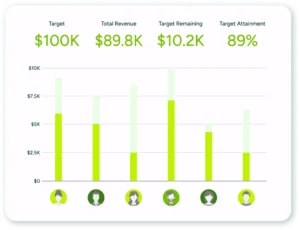
When selecting a CRM for cross-selling, prioritize features like strong segmentation, integrated policy tracking, automation capabilities, and intuitive dashboards. These tools will not only help your team stay organized but also enable smooth cross-selling through data-driven insights and optimized workflows.
Sales Leadership
Cross-Selling Strategies in Insurance Using CRM: Your 2025 Guide

Summary of cross-selling strategies in insurance with CRM
In 2025, insurance professionals are turning to CRM platforms to unlock powerful cross-selling opportunities that grow revenue, improve retention, and strengthen client relationships. By leveraging features like segmentation, policy integration, and personalized outreach, agents can easily identify and act on new sales opportunities from their existing book of business. This guide explores how CRMs help insurance teams turn everyday interactions into long-term value, making it a must-read for anyone serious about increasing policy count per client.
Key takeaways:
-
Why it matters: Cross-selling increases client lifetime value and reduces acquisition costs.
-
CRM’s role: CRMs identify gaps in coverage and automate cross-sell suggestions.
-
Essential features: Look for segmentation tools, integrated policy data, and personalized communication options.
-
Top strategies: Use life events, renewals, and client trust to drive targeted offers.
-
Success in action: Thrive Wealth Management improved client relationships and sales outcomes with Maximizer CRM.
-
What’s next: AI, predictive analytics, and omnichannel engagement are shaping the future of insurance cross-selling.
-
Who it’s for: Ideal for agencies of all sizes looking to grow through smart, data-driven client engagement.
What is cross-selling in Insurance?
Cross-selling in insurance is when an insurance company or agent suggests another type of insurance to a customer who already has one. For example, if someone buys car insurance, the agent might also offer them home or life insurance. This helps the customer stay better protected and helps the company make more sales.
Why cross-selling matters in insurance

The revenue potential of cross-selling
Cross-selling is a revenue accelerator. When insurance agents successfully cross-sell, they increase the average policy value and strengthen client loyalty. A customer with multiple policies is more likely to stay, refer others, and trust the agent’s recommendations. Multi-policy clients can generate more lifetime value (LTV) compared to single-policyholders.
Beyond retention, the cost of acquisition for new clients is significantly higher than selling to existing ones. By leveraging existing trust and engagement, insurance professionals can offer additional products, like bundling auto, home, and life insurance, that meet evolving client needs while boosting agency performance.
Challenges without a CRM
Despite the clear benefits of cross-selling, it’s not always a straightforward process. Without a centralized CRM system, agents often rely on memory, static spreadsheets, or siloed policy data. This manual approach severely limits visibility into each client’s current policies and what they may need in the future. The lack of integrated tools makes it difficult for agents to track interactions, identify gaps in coverage, and provide the tailored advice clients expect.
Some of the key challenges include:
-
Lack of real-time client insights: Agents can’t see at a glance which products a client may be missing.
-
Inconsistent communication: Without automation, follow-ups and renewal reminders can fall through the cracks.
-
Missed life events: Births, home purchases, or marriages often signal the need for new insurance products, but without CRM tracking, these moments get overlooked.
How CRM enables cross-selling in insurance

Identifying opportunities with client data
A modern CRM helps insurance agents unlock valuable insights from client data. Instead of sifting through disorganized files, agents get a 360-degree view of each customer’s policy history, recent interactions, key life events, and more. This centralized information helps agents identify coverage gaps or suggest complementary products. If a client has home insurance but not auto coverage, a CRM can flag this as a potential cross-sell opportunity. Some systems, like Maximizer, allow users to filter client lists by product type, renewal date, or demographic to generate highly targeted sales opportunities.
Automating cross-sell suggestions
CRMs take automation a step further by providing cross-sell prompts automatically. Leveraging pre-set rules or AI-driven logic, the CRM can suggest relevant policies to offer during client interactions. This functionality saves agents valuable time by eliminating the need for manual data searches, while also ensuring that no potential opportunity is overlooked.
Key benefits of automation include:
-
Timely alerts: Automated notifications are sent when clients are approaching policy renewals or experiencing significant life milestones, ensuring agents never miss the perfect moment to introduce additional products.
-
Built-in checklists: CRMs come with checklists that guide agents step-by-step on what products to offer next, taking the guesswork out of cross-selling and ensuring that agents are always on track.
-
Templates for personalized communication: With pre-built templates for personalized emails or calls, agents can quickly and effectively highlight relevant add-ons, improving the quality of client interactions and increasing the chances of successful sales.
Tracking and measuring success
It’s not just about making offers, it’s about knowing what works. CRM reporting tools help managers and agents track the performance of their cross-sell campaigns. You can monitor open rates, response times, and conversion percentages to refine your approach over time. With dashboards that show which products are most frequently bundled or which client segments are most responsive, insurance teams can build smarter sales strategies backed by data. Maximizer’s built-in reporting tools, for example, help agencies visualize trends and adjust outreach accordingly.
Key CRM features for cross-selling success

Client segmentation and profiling
Effective cross-selling starts with a clear understanding of your clients’ unique needs and life stages. A CRM that enables advanced segmentation and profiling empowers insurance agents to group clients based on specific factors like age, income bracket, policy history, family composition, and even risk tolerance. This level of detail allows agents to go beyond generic offers and create highly targeted campaigns that speak directly to each client segment.
With segmentation, you can:
-
Identify groups with common needs (e.g., new homeowners, retirees)
-
Deliver more relevant offers that improve conversion rates
-
Plan targeted campaigns for each segment based on real data
Integration with policy data
One of the most valuable features a CRM can offer insurance professionals is direct integration with policy management systems. This functionality gives agents a real-time, centralized view of all client policies, eliminating the need to switch between systems or rely on memory to assess coverage. Instead, agents can immediately see what a client has, what’s missing, and what might need renewal.
Benefits of policy integration include:
-
A complete view of all active and expired policies
-
Automated alerts for renewals, lapses, or new coverage needs
-
More accurate and timely cross-sell conversations
Personalized communication tools
In today’s client-centric environment, personalization isn’t optional; it’s essential. CRMs with robust communication tools help agents deliver messages that are tailored, timely, and relevant to each individual’s circumstances. Whether it’s a reminder about an upcoming renewal or a suggestion for bundling policies, personalized outreach builds trust and drives engagement.
Personalized communication tools offer:
-
Merge fields to auto-fill names, products, and renewal info
-
Pre-built email templates for different scenarios (e.g., bundling offers)
-
Multi-channel options: Email, SMS, phone calls for tailored outreach
Strategies to maximize cross-selling with CRM

Leveraging life events and renewals
Major life events often signal new insurance needs. Buying a home, getting married, having children, or starting a business all open the door to additional coverage opportunities. A CRM helps agents track these milestones and use them as timely triggers for personalized cross-sell offers. Pair that with renewal cycles, and you’ve got two powerful moments to re-engage clients with relevant recommendations.
With CRM, you can:
-
Set alerts for key life events or policy milestones
-
Send targeted offers at renewal time when clients are more receptive
-
Use notes from past interactions to inform future outreach
Training agents for cross-sell success
Even the best CRM can’t do it all without the right team behind it. Training agents to recognize cross-sell signals and use CRM tools effectively is critical to driving success. It’s not just about knowing the product lineup, it’s about understanding how to translate client data into personalized, persuasive offers. When agents are confident in both their tools and their strategy, cross-selling becomes second nature not an afterthought.
Training should focus on:
-
Interpreting CRM dashboards and client profiles
-
Using segmentation and policy data to identify next-best offers
-
Practicing communication that emphasizes value, not upsell pressure
Building trust through tailored offers
Cross-selling should never feel pushy. When done right, it’s a service, not a sales tactic. Tailored offers show clients that you understand their needs and are proactively looking out for their financial well-being. CRMs make it possible to customize every touchpoint based on real client data and past conversations, helping build long-term relationships rooted in trust.
To build trust, agents can:
-
Reference specific client situations when making a recommendation
-
Offer clear value with bundled discounts or enhanced protection
-
Avoid mass emails and instead focus on individualized outreach
Real-world examples of CRM-driven cross-selling

Case study: Thrive Wealth Management grows smarter with Maximizer
Thrive Wealth Management, a Canadian financial advisory firm, illustrates how a well-implemented CRM can transform client relationships and reveal new cross-sell potential. By adopting Maximizer, the firm gained a centralized view of all client interactions, allowing their advisors to identify opportunities that had previously gone unnoticed.
The CRM enabled their team to:
-
Maintain detailed client profiles with segmented financial goals
-
Track product holdings and service gaps across different life stages
-
Automate reminders for reviews and new policy recommendations
With Maximizer, Thrive’s advisors were able to deepen client engagement while increasing wallet share per household. The firm reported that having a centralized and customizable CRM was critical in offering tailored solutions, allowing them to shift from transactional sales to long-term advisory relationships built on trust.
“The more connected we are to our clients’ needs, the more value we can provide. Maximizer helps us stay ahead of those needs,” said a Thrive team member in their case study.
Future trends in insurance cross-selling for 2025
The insurance industry is undergoing a rapid evolution and in 2025, cross-selling is no longer just about timing and relationships. It’s about precision, automation, and anticipating client needs through technology. As consumer expectations shift toward more personalized, digital-first experiences, insurers that embrace modern tools will be better positioned to engage clients, boost revenue, and create lasting loyalty.
Key trends shaping cross-selling in 2025:
-
Predictive analytics to forecast client needs
Modern CRMs now leverage predictive CRM reporting analytics dashboard to determine which products a client is most likely to need next. By analyzing historical purchase data, lifestyle changes, and engagement patterns, these tools forecast potential needs with high accuracy. For example, if a client recently purchased a home and has young children, the system may prioritize life insurance or mortgage protection as the next logical step. -
Hyper-personalized offers powered by AI
Artificial intelligence is helping insurers move beyond basic segmentation into the realm of true personalization. AI CRM can dynamically tailor offers based on individual preferences, behaviour, and policy history. The result is not just better engagement, but more trust clients receive offers that feel relevant, not generic. Hyper-personalized cross-sell campaigns consistently outperform broad messaging in terms of open rates, conversions, and client satisfaction. -
Integration with digital and omnichannel platforms
Today’s clients interact across multiple digital channels, from email to mobile apps to chatbots. A major trend in 2025 is CRM integration with these platforms, ensuring that cross-sell opportunities are present wherever the client is most active. Text reminders about expiring policies, in-app suggestions for bundling, or a chatbot that offers additional coverage during a support conversation are just a few examples of how omnichannel integration is making cross-selling more efficient and less intrusive. -
Behaviour-based triggers and automation
Rather than relying on static timelines, CRMs are increasingly using behaviour-based triggers to initiate cross-sell actions. If a client logs into their account and reviews auto policy details, that action might trigger a follow-up email about home insurance bundles. This type of automated, context-aware engagement keeps the conversation timely and relevant without requiring constant manual intervention from agents. -
Client self-service tools that encourage exploration
Another emerging trend is the rise of CRM-integrated client portals that encourage policyholders to explore coverage options on their own. These self-service platforms often include interactive tools like “Coverage Gap Analyzers” or “Bundle & Save Calculators,” which not only educate clients but also drive cross-sell interest organically. Empowered clients are more likely to trust the buying process and complete purchases with confidence.
Frequently asked questions: Cross-selling in insurance with CRM

1. How does CRM identify cross-selling opportunities in insurance?
CRMs analyze client data, including existing policies, demographic details, and life changes, to identify coverage gaps. They then suggest timely, relevant products, ensuring agents offer the right solutions at the right time, increasing the chances of successful cross-sells.
2. What types of insurance products are easiest to cross-sell?
Complementary products like home and auto bundles, life insurance, travel coverage, and renters policies are the easiest to cross-sell. These products align with common client needs and often complement one another, making them ideal for offering clients comprehensive coverage.
3. Can small insurance agencies use CRM for cross-selling?
Yes, CRMs are incredibly beneficial for small agencies. They help boost client management, automate outreach, and identify cross-sell opportunities that may otherwise be missed due to limited time, resources, or staff, ultimately supporting business growth.
4. How can I measure cross-sell success with a CRM?
You can measure cross-sell success using CRM reporting tools to track key metrics like policy bundling rates, client engagement, new product conversions, and overall revenue growth. These insights provide clear data on how well your cross-selling efforts are performing and where improvements are needed.
5. What should I look for when choosing a CRM for insurance cross-selling?
Subscribe to our Newsletter
Related Articles