List of 5 Best CRM Analytics for Financial Services [2025]
![List of 5 Best CRM Analytics for Financial Services [2025]](https://uk.maximizer.com/wp-content/uploads/2025/04/Best-CRM-Analytics-for-Financial-Services_blog.jpg)
CRM Analytics Software
CRM analytics has become essential for financial services firms seeking to improve client insight, ensure regulatory compliance, and drive sustainable growth. From centralized dashboards to predictive AI and real-time compliance tracking, these tools transform raw data into strategic advantage. With options like Maximizer, Salesforce, and Zoho CRM, firms of all sizes can make smarter decisions and deliver more personalized service at scale.
Key takeaways:
-
CRM analytics reveals patterns and opportunities across the client lifecycle, enabling more personalized and proactive service.
-
Supports compliance by tracking documentation, audit trails, and advisor activity in real time.
-
Top features to look for include customizable dashboards, predictive AI, and integration with planning or custodial platforms.
-
Leading tools in 2025 include Maximizer, Salesforce Financial Services Cloud, Microsoft Dynamics 365, HubSpot CRM, and Zoho CRM Analytics.
-
Best-fit CRMs depend on firm size and focus, with affordable, scalable options available for small and mid-sized financial teams.
-
Successful adoption requires training, customization, and alignment with firm-specific KPIs.
What is CRM Analytics Software?
CRM Analytics is the process of analyzing customer data in a CRM system to uncover trends, predict outcomes, and improve business decisions. Unlike software-specific explanations, CRM Analytics applies to any CRM platform, making it relevant to a wider audience searching for this topic.
Why CRM analytics matter for financial services
Financial services firms are expected to deliver more personalized advice, maintain strict regulatory compliance, and anticipate client needs all while managing growing volumes of data. CRM analytics empowers firms to meet these demands by transforming raw data into usable insights. With the right analytics tools in place, firms can improve client service, strengthen internal decision-making, and stay ahead of compliance requirements.
Unlocking client and business insights
CRM analytics allows financial professionals to go beyond static records and surface patterns across the client journey. Advisors can view which clients are engaging, what services are being underutilized, and where opportunities for upselling or deeper planning exist.
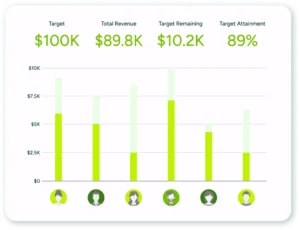
Through centralized dashboards, firms can visualize performance by advisor, client segment, or service category, identifying where the firm is thriving and where improvements are needed. By tying analytics to client outcomes, firms can deliver more informed advice while sharpening their own business strategy. Analytics also supports better forecasting. By analyzing historical performance and real-time data trends, leadership can predict revenue fluctuations, track acquisition and churn rates, and allocate resources more efficiently.
Benefits of analytics for compliance and growth
CRM analytics doesn’t just improve client service, it’s a powerful ally in regulatory oversight. Financial firms must constantly monitor advisor activity, document recommendations, and prove that risk assessments and disclosures are happening as required. Analytics simplifies this by offering real-time reporting, alerting teams to missing documentation, and maintaining searchable audit trails.
On the growth side, analytics tools help firms identify their most profitable segments, understand lifetime value trends, and tailor outreach based on client needs. As regulations evolve and competition intensifies, firms that adopt strong CRM analytics practices are better equipped to adapt — and to scale.
Key features to look for in CRM analytics tools
Not all CRM analytics platforms are built the same. Financial firms need more than flashy charts they need functionality that drives results. When evaluating CRM tools for analytics, it’s important to look for features that support client insight, data accuracy, and operational compliance.
Data visualization and dashboards
At the heart of every strong analytics platform is the ability to visualize data clearly. Financial professionals rely on dashboards to track key metrics like client acquisition, portfolio growth, and advisor activity. A good CRM tool should allow users to create customized dashboards that reflect their unique workflows and client priorities.
Real-time updates, interactive charts, and filtering options help teams understand patterns quickly and take action without digging through spreadsheets. Dashboards should be accessible, intuitive, and role-specific — giving leadership, advisors, and support staff the information they need at a glance.
Predictive analytics and AI
Predictive analytics helps financial firms move from reactive to proactive. With AI-powered tools, CRM platforms can identify which clients are at risk of attrition, which leads are most likely to convert, and what types of products or services different segments may need next.
These insights can significantly improve decision-making and resource allocation. For example, rather than guessing which clients to prioritize, firms can use predictive scores to guide outreach and engagement strategies. AI also enables smarter automation, surfacing recommendations based on past behaviours, trends, and outcomes.
Integration with financial systems
For CRM analytics to be truly effective, it needs to connect with the rest of your tech stack. The best tools integrate with financial planning platforms, compliance software, marketing automation tools, and custodial systems. This ensures your analytics reflect the full client picture, not just isolated CRM activity. Integrated systems also reduce manual work, increase data accuracy, and allow firms to create more complex reports, like combining investment performance with engagement metrics or layering client behaviour over account milestones.
Choosing a CRM that plays well with others ensures your analytics can support both day-to-day operations and big-picture strategy.
Best CRM analytics software for financial services in 2025
1) Maximizer – Efficient CRM Analytics and Reporting Software
Maximizer is a top pick for financial professionals in 2025, offering an all-in-one solution designed to drive client insight, regulatory compliance, and revenue growth. Its deep customization capabilities, strong focus on security, and analytics-driven dashboards make it an ideal choice for advisors, planners, and financial service firms seeking reliable, real-time performance data.
Maximizer supports every stage of the client relationship, from onboarding and financial planning to retention and upselling. With its easy-to-use interface and robust CRM analytics for financial services, it gives teams the tools to visualize trends, identify growth opportunities, and manage compliance with confidence.
Key Features:
-
Client Segmentation & Profiles: Organize and analyze clients by financial goals, behaviour, and value
-
Predictive Sales Insights: Forecast revenue, track advisor performance, and uncover upsell potential
-
Compliance Reporting: Monitor documentation, track disclosures, and prepare for audits
-
Data Dashboards: Build custom visual reports for KPIs, retention, marketing campaigns, and more
-
Canadian Hosting & Compliance: Local data storage that aligns with PIPEDA and other financial regulations
Pricing:
-
Base Edition: $89/month
-
Sales Leader: $100/month
-
Financial Advisor Edition: $100/month
Usability:
Maximizer is built for flexibility, offering a clean cloud-based interface accessible across desktop and mobile. Users can configure dashboards to highlight what matters most, automate recurring workflows, and integrate with other financial systems. Whether you’re managing a boutique client list or a growing portfolio, Maximizer scales with your business.
Why it’s great for financial services:
Maximizer is purpose-built for the financial sector. Its analytics tools go beyond standard reporting, giving firms the ability to uncover trends, manage risk, and deliver truly personalized service — all while maintaining regulatory readiness.
2) Salesforce CRM Analytics (Financial Services Cloud)
Salesforce’s Financial Services Cloud, powered by CRM Analytics, is a powerhouse platform designed to meet the complex needs of banks, wealth managers, and insurance providers. It offers an enterprise-grade suite of analytics tools that help financial professionals understand client behaviour, deliver personalized experiences, and manage compliance efficiently.
With AI-driven insights from Einstein Analytics, Salesforce enables firms to anticipate client needs, identify risks early, and recommend products or services with greater accuracy. Financial teams can access real-time dashboards, customer segmentation, and predictive reports that support smarter decision-making at every level.
Key Features:
-
Einstein AI Analytics: Predict churn, surface growth opportunities, and improve forecasting accuracy
-
Client Lifecycle Intelligence: Gain full visibility into every interaction, from onboarding to renewal
-
Regulatory Tracking: Built-in tools for compliance documentation and audit support
-
Customizable Dashboards: Visualize KPIs, revenue performance, advisor activities, and more
-
Industry Integrations: Connect with core financial systems, portfolio tools, and document workflows
Pricing:
-
Financial Services Cloud Starter: From $300/user/month
-
Einstein Analytics Add-On: Starting at $700/month
Usability:
Salesforce offers a highly flexible user experience, though it does come with a steeper learning curve. It’s best suited for firms with dedicated CRM admins or larger support teams. Once configured, the platform supports deep data visibility, complex reporting, and automated alerts across teams and departments.
Why it’s great for financial services:
Salesforce Financial Services Cloud delivers some of the most advanced CRM analytics in the industry. With robust AI capabilities and an unmatched ecosystem of integrations, it’s ideal for firms seeking predictive power, cross-departmental visibility, and strong compliance oversight.
3) Microsoft Dynamics 365
Microsoft Dynamics 365 offers a unified CRM and ERP platform with powerful analytics features tailored to financial services. Its integration with Power BI enables rich data visualizations and predictive modeling, helping financial professionals gain actionable insights across client management, marketing, and compliance.
With its modular architecture, firms can deploy only the components they need, such as Sales, Customer Insights, or Finance, and connect them to create a fully integrated experience. Dynamics 365 is particularly well-suited for firms already working within the Microsoft ecosystem.
Key Features:
-
Embedded Power BI Dashboards: Build real-time reports and dashboards for team and executive use
-
Customer Insights Module: Track client interactions, segment audiences, and analyze behaviour
-
AI-Driven Forecasting: Automate pipeline tracking and revenue prediction
-
Regulatory Compliance Tools: Enable secure data tracking, audit history, and document management
-
Microsoft 365 Integration: Connect with Outlook, Excel, Teams, and SharePoint
Pricing:
- Custom pricing plans available
Usability:
Dynamics 365 offers a familiar interface for users of Microsoft products, with deep customization options for dashboards and reporting. However, setup may require IT support or a partner for more complex configurations. Once in place, the system supports scalable analytics that align closely with firm-specific goals.
Why it’s great for financial services:
Microsoft Dynamics 365 delivers flexible, enterprise-grade analytics with strong integration capabilities. Its customer insight tools and predictive dashboards give financial firms the data-driven visibility they need to serve clients better and make informed business decisions.
4) HubSpot CRM
HubSpot CRM is a well-known platform for inbound marketing and client engagement, but its analytics capabilities have also made it a strong contender for financial services firms, especially those focused on growth and digital-first experiences. With built-in reporting dashboards, client activity tracking, and customizable pipelines, HubSpot enables advisors to manage relationships while gaining real-time insight into performance and outreach effectiveness.
The platform stands out for its ease of use and marketing integration, making it a strong fit for small to mid-sized financial firms looking to attract, nurture, and retain clients through data-backed strategies.
Key Features:
-
Client Interaction Tracking: Monitor email opens, meeting activity, call logs, and deal progress
-
Custom Dashboards: Build visual reports to track conversion rates, retention, and outreach success
-
Marketing Analytics: Analyze campaign performance and client engagement across email, ads, and web
-
Pipeline Management: Forecast sales and manage client journey stages with drag-and-drop visibility
-
App Integrations: Connect with tools like QuickBooks, Slack, Mailchimp, and Google Workspace
Pricing:
-
Free CRM: $0/month (with core analytics)
-
Starter CRM Suite: $20/month
Usability:
HubSpot is known for its intuitive user interface and short learning curve. Financial teams can get started quickly with pre-built templates, helpful training resources, and a strong community. Its clean design and flexible dashboards make it easy for both advisors and marketing teams to interpret data and act on it fast.
Why it’s great for financial services:
HubSpot provides accessible analytics tools that help financial professionals understand and optimize client interactions. For firms that value client engagement and want to blend marketing with relationship management, HubSpot offers a user-friendly path to data-driven growth.
5) Zoho CRM Analytics
Zoho CRM Analytics is a powerful solution for financial firms that need advanced reporting at a competitive price point. With Zoho Analytics fully integrated, users can dive deep into metrics like lead conversion, deal velocity, and customer retention — all while customizing dashboards that align with their firm’s specific performance indicators.
Zoho offers a wide range of automation tools alongside analytics, giving financial professionals the ability to manage client touchpoints, segment audiences, and track KPIs without toggling between platforms.
Key Features:
-
Advanced Data Visualizations: Access over 75 pre-built reports or create custom dashboards
-
AI-Powered Insights: Use Zia, Zoho’s AI assistant, to identify trends and make smarter decisions
-
Financial Integrations: Connect to accounting, email, help desk, and document systems
-
Automated Alerts: Set triggers for deal changes, compliance tasks, or advisor milestones
-
Role-Based Access: Manage dashboard views by team or department for secure collaboration
Pricing:
-
Standard: $19/user/month
-
Professional: $31/user/month
-
Enterprise: $50/user/month
-
Ultimate $65/user/month
Usability:
Zoho CRM is highly customizable and designed to grow with your business. While its advanced features can take time to set up, the system offers significant flexibility for firms that want to dig deep into their analytics. It also provides strong mobile support, making it a solid choice for on-the-go advisors.
Why it’s great for financial services:
Zoho offers enterprise-level analytics at a budget-friendly cost. Its AI-driven insights, customizable reporting, and integration-friendly design make it a smart choice for financial firms looking to scale analytics without overspending.
How to choose the best CRM analytics tool for financial services
Selecting the right CRM analytics platform is a strategic decision that can shape the way your team operates, grows, and serves clients. Whether you’re an independent advisor or part of a large firm, choosing the right solution means aligning functionality with your team’s specific goals, processes, and compliance requirements. Here are a few key factors to guide your decision.
Assessing your firm’s data needs
Start by evaluating what kind of data your team collects and how you plan to use it. Are you primarily looking to track client interactions and improve retention? Or are you focused on forecasting revenue and measuring advisor productivity? Some platforms are designed for detailed performance analytics, while others excel in marketing metrics or workflow tracking. Create a short list of your most important KPIs, such as AUM growth, client acquisition rate, or advisor utilization and make sure the CRM you choose can track and visualize these metrics without heavy customization.
Evaluating integration and compliance features
A CRM’s analytics are only as strong as the data behind them. Look for a tool that integrates well with your existing tech stack, including financial planning software, compliance platforms, marketing systems, and email providers. Integration reduces manual entry, improves data accuracy, and ensures a complete view of the client journey.
You should also prioritize compliance. Financial services firms face strict regulations, so it’s critical to select a platform that supports data security, audit logs, permission settings, and industry-specific requirements like PIPEDA or FINRA standards. Look for built-in reporting features that simplify documentation and reduce compliance overhead.
Balancing cost and scalability
Analytics should provide long-term value, not just short-term functionality. Think about how your needs will evolve as your client base grows. Can the CRM scale with your firm? Will it support additional users, integrations, and customizations as your team expands?
At the same time, stay realistic about your budget. Some platforms offer entry-level pricing with limited features, while others bundle analytics into premium tiers. Consider the total cost of ownership, including setup, training, add-ons, and ongoing support. The best CRM for your firm is one that delivers clear ROI through actionable insights, improved workflows, and better client outcomes
Getting started with your chosen CRM analytics tool
Choosing the right CRM platform is just the beginning. To get the most out of your analytics capabilities, your team needs a well-planned rollout, proper training, and a commitment to making data-driven decisions part of the everyday workflow. A smooth implementation helps ensure that the system delivers real business value, not just more reports.
Implementation steps for financial teams
-
Define your analytics goals:
Start by clearly identifying what insights matter most to your firm. Are you aiming to increase client retention, improve advisor productivity, reduce compliance risk, or forecast revenue more accurately? Setting concrete goals ensures your analytics setup supports real business outcomes, not just vanity metrics. -
Customize dashboards and reports:
Tailor dashboards to reflect the unique roles within your organization. For example, a financial advisor might need visibility into client touchpoints and deal stages, while an operations lead may want to monitor onboarding timelines or compliance checks. Most CRM tools allow you to build both individual and team-wide dashboards that are easy to update and share. -
Integrate your data sources:
Connect your CRM with key tools like your financial planning software, client communication platforms (email or SMS), marketing automation tools, and any custodial or accounting systems. When data flows freely across platforms, it eliminates blind spots and gives you a holistic view of the client journey from first contact to long-term engagement. -
Set up workflows and automated alerts:
Automation saves time and ensures no opportunity or compliance task slips through the cracks. Use your CRM to trigger reminders for important milestones (like KYC updates or review meetings), send alerts when clients hit predefined thresholds (such as AUM growth or portfolio drift), and assign follow-ups when engagement dips. -
Test thoroughly before launching company-wide:
Run a pilot program with a small group of advisors or support staff. Use this testing period to validate that the dashboards are easy to use, the reports are pulling accurate data, and the workflows make sense. Adjust as needed before rolling out the system across your firm. A well-tested rollout reduces user frustration and encourages long-term adoption. -
Create an internal analytics champion:
Assign someone within your team to serve as the go-to person for analytics. This person can help field questions, troubleshoot issues, and suggest improvements as your needs evolve. Having an internal expert speeds up adoption and builds accountability into the process.
Training tips for actionable insights
-
Offer role-specific onboarding sessions:
Each team member should know how to use the CRM for their particular responsibilities. Frontline advisors may need training on client insights and dashboard filters, while compliance staff may focus on audit reports and tracking documentation history. -
Use templates and standard reporting formats:
Pre-built report templates save time and promote consistency. Set up templates for things like weekly pipeline reviews, monthly client retention snapshots, or quarterly compliance checks. These can be cloned, customized, and reused as needed. -
Schedule regular review sessions:
Encourage the team to set aside 15–30 minutes each week to review dashboards and discuss findings. These mini check-ins help spot issues early, celebrate wins, and build a data-focused culture. -
Keep training ongoing and iterative:
As your team becomes more comfortable with analytics, introduce new features, advanced filters, or custom report-building skills. Host occasional lunch-and-learns or internal webinars to deepen CRM fluency over time. -
Revisit metrics quarterly:
Your firm’s goals and client base may shift throughout the year. Make it a habit to revisit your analytics setup quarterly to ensure it’s still aligned with your business strategy, growth objectives, and regulatory responsibilities.
Frequently asked questions: CRM Analytics Software for Financial Services
What makes CRM analytics essential for financial services?
CRM analytics gives financial professionals real-time insights into client behaviours, sales pipelines, compliance progress, and business health. These insights help firms improve client service, forecast growth, manage risk, and stay audit-ready. In short, analytics turns raw client data into strategic action which is critical in today’s competitive and highly regulated environment.
Are there cost-effective CRM analytics tools for small financial firms?
Yes. Several CRM platforms offer affordable pricing tiers and strong analytics features tailored for smaller teams. Tools like Maximizer provide scalable solutions with reporting, automation, and security features that don’t require enterprise-level budgets.
How do CRM analytics improve financial compliance?
CRM analytics helps firms track advisor activity, maintain documentation records, and generate reports required by regulators. Many platforms include automated alerts for missing data, disclosures, or review meetings, ensuring that no compliance task is overlooked. Audit trails and role-based access controls also support secure, transparent record-keeping.
Subscribe to our Newsletter
Related Articles