Sales Leadership & the Role of a Sales Leader in Team Motivation, Training & Operations

Quick Overview:
Sales leadership is the driving force behind high-performing teams and long-term business success. More than just managing day-to-day operations, effective sales leaders inspire, guide, and empower their teams through vision, coaching, and strategic insight. This blog explores what sets sales leadership apart from management, outlines a competency framework for developing leaders, and offers practical strategies, like goal-setting, motivation, and CRM integration to elevate leadership impact across any sales organization.
Key Takeaways:
-
Sales leadership focuses on purpose, development, and long-term success—not just hitting KPIs.
-
Sales leaders inspire change, coach individuals, and align team performance with company vision.
-
A strong leadership competency model includes strategic thinking, communication, coaching, adaptability, and data-driven decision-making.
-
Great leaders lead by example, set clear goals, and personalize motivation strategies to retain top talent.
-
CRM tools like Maximizer support leadership with real-time data, performance insights, and pipeline visibility.
-
Real-world companies like Kyzen and Bahrain International Circuit have transformed operations through CRM-enabled leadership.
-
Developing sales leaders is a continuous process that requires intentional investment in skills, tools, and culture.
What is sales leadership?
Definition and importance
Sales leadership is more than just managing a team it’s about guiding, inspiring, and empowering people to achieve extraordinary results. At its core, sales leadership is the ability to influence and drive performance through vision, culture, and continuous development. While management often focuses on systems and processes, leadership emphasizes people, purpose, and potential.
In today’s hyper-competitive market, sales leadership is a critical differentiator. It shapes not only how a team performs but how it evolves over time. Organizations that invest in strong leadership in sales are more likely to see consistent revenue growth, higher employee retention, and stronger customer relationships. Sales leaders serve as the bridge between strategy and execution, translating business goals into team-driven outcomes. They don’t just focus on the “what” but prioritize the “how” and “why,” fostering a culture of accountability, ambition, and collaboration.
The role of a sales leader vs. a sales manager
While the titles “sales leader” and “sales manager” are often used interchangeably, their roles and responsibilities differ in subtle but important ways. A sales manager ensures the team hits its numbers by monitoring KPIs, overseeing daily tasks, and enforcing policies. Their focus is operational. A sales leader, however, goes beyond the dashboard. Sales managers maintain. Sales leaders transform. Both are essential but in the age of complex sales cycles, global competition, and data overload, sales leadership is what truly moves the needle. They build vision, culture, and direction. Sales leaders are forward-thinkers who:
-
Inspire teams through purpose and example
-
Drive change and innovation
-
Focus on long-term growth rather than just short-term wins
-
Coach individuals with an eye toward development, not just performance
Sales leadership competency model
Overview of the sales leadership competency model
The sales leadership competency model is a structured framework that outlines the key capabilities required to lead high-performing sales organizations. It provides a blueprint for identifying, developing, and evaluating leadership in sales. At its core, the model helps organizations answer a critical question: What does excellence in sales leadership look like? It moves beyond vague attributes and lays out specific, measurable competencies that drive success.
This model is particularly valuable for:
-
Identifying high-potential leaders within the sales team
-
Structuring leadership development programs
-
Aligning leadership goals with business outcomes
-
Creating a shared language around performance and expectations
By leveraging a competency model, companies can ensure they aren’t just promoting top sellers; they’re cultivating true leaders.
Key components of a strong sales leader
A strong sales leader embodies a blend of soft and hard skills, combining emotional intelligence with analytical thinking. The sales leadership competency model typically highlights several essential traits:
-
Strategic vision and the ability to align team efforts with business goals
-
Exceptional communication and the power to influence
-
A commitment to coaching and developing others
-
Data literacy to guide decisions with confidence
-
Agility in adapting to change and uncertainty
Sales leadership competency framework: core skills
Strategic thinking and vision
Sales leaders must have the ability to see the bigger picture. Strategic thinking involves understanding market trends, customer needs, and competitive dynamics. But more importantly, it’s about aligning those insights with organizational goals and crafting a vision that the entire sales team can rally behind. Strong strategic thinkers don’t just react to change; they anticipate it. They build long-term plans that account for both risk and opportunity. They also know how to articulate their vision in a way that motivates their teams and drives aligned action.
Communication and influence
Leadership in sales hinges on the ability to communicate with clarity, conviction, and consistency. Sales leaders must be able to convey vision, deliver feedback, resolve conflict, and influence a variety of stakeholders, from C-suite executives to frontline reps. It’s not just what they say; it’s how they say it. Effective communication builds trust, fosters alignment, and drives results. Influential leaders also understand how to tailor their messaging based on audience, context, and desired outcome.
Strong communicators in sales leadership roles:
-
Foster transparency and openness
-
Practice active listening
-
Use storytelling to inspire and motivate
-
Influence without relying solely on authority
Coaching and team development
One of the most important aspects of sales team leadership is coaching. Great leaders don’t just evaluate performance; they elevate it. They recognize individual strengths and areas for growth, offering guidance that is both supportive and challenging. Sales coaching is not about micromanaging; it’s about unlocking potential. Through regular check-ins, tailored feedback, and skills development, leaders can help reps build confidence, improve conversion rates, and increase job satisfaction. Coaching is also a long-term investment. It creates a pipeline of future leaders, reduces turnover, and builds a culture of learning and excellence.
Data-driven decision making
Today’s sales leaders must be fluent in data. Gut instinct alone is no longer enough. From forecasting to pipeline management, data informs every critical decision. But it’s not just about collecting numbers; it’s about interpreting them and using them to guide action.
Sales leadership skills in this area include:
-
Analyzing trends to uncover opportunities or risks
-
Using dashboards and reports to track performance
-
Setting realistic goals based on historical and predictive data
-
Making informed choices about resource allocation
The ability to blend analytics with human insight is what separates good sales leaders from great ones.
Adaptability and change management
Markets shift. Customer behavior evolves. Technology transforms. Sales leaders must be ready to respond and help their teams do the same. Adaptability isn’t just a nice-to-have; it’s essential in modern sales environments. Change management involves guiding people through transitions to minimize disruption and maximize buy-in. Whether it’s rolling out a new CRM, entering a new market, or restructuring the sales org, leaders must communicate clearly, manage resistance, and maintain momentum. Adaptable leaders are resilient, resourceful, and future-focused. They turn uncertainty into opportunity and lead with confidence in times of change.
Best practices for effective sales leadership
Leading by example
The foundation of great sales leadership is action. The most respected leaders don’t sit on the sidelines they participate, contribute, and demonstrate what success looks like. Leading by example means showing up with consistency, integrity, and intention every single day. Whether it’s picking up the phone to close a tough deal, sitting in on sales calls to mentor junior reps, or giving constructive feedback during performance reviews, leaders who are present and engaged build credibility fast. This level of involvement creates a ripple effect. Teams pay attention to what leaders prioritize and how they behave under pressure. By modeling resilience, curiosity, and accountability, sales leaders create a culture where those same values are echoed back throughout the team.
What leading by example looks like in practice:
-
Rolling up your sleeves during crunch times to help the team hit their numbers
-
Demonstrating a strong work ethic and consistent follow-through
-
Being transparent about challenges and taking ownership of mistakes
-
Keeping promises, whether to customers or colleagues
-
Showing genuine enthusiasm and commitment to team goals
When sales leaders lead from the front, they build trust and loyalty that spreadsheets can’t measure.
Setting clear goals and expectations
Without clarity, even the most talented sales team will flounder. Clear, measurable goals provide structure and focus. But effective leadership in sales goes beyond simply setting targets it involves aligning those targets with the company’s strategic objectives and helping each team member understand how their work contributes to the bigger picture. Setting expectations is also about defining what success looks like. This includes not just results, but how those results should be achieved. Are reps expected to prioritize upselling? Focus on a specific vertical? Shorten the sales cycle? Clarifying these expectations upfront eliminates confusion and ensures everyone is working in the same direction.
Best practices for setting and maintaining strong goals and expectations include:
-
Collaborating with reps during the goal-setting process to ensure buy-in and personal relevance
-
Breaking down large, annual targets into smaller milestones such as monthly or quarterly objectives to maintain motivation and momentum
-
Using historical and real-time performance data to set realistic but challenging benchmarks
-
Clearly articulating the ‘how’ behind performance expectations (e.g., expected behaviors, customer engagement standards, follow-up protocols)
-
Regularly reviewing and recalibrating goals to account for market changes or shifts in business priorities
Motivating and retaining top sales talent
Sales is rewarding, but it’s also demanding. The pressure to perform, meet quotas, and manage customer relationships can lead to high levels of stress and, if left unchecked, eventual burnout. That’s why motivation and retention are at the heart of sales team leadership. Great leaders don’t just hire talented people; they create an environment that keeps them engaged, supported, and eager to grow.
Motivation is deeply personal. Some reps are driven by financial incentives, while others seek recognition, autonomy, or opportunities to lead. The most effective sales leaders take the time to understand what motivates each team member and tailor their approach accordingly. Retention, meanwhile, begins with the relationships leaders build. People don’t leave companies; they leave poor managers. When leaders invest in people, make time for one-on-ones, and support long-term career paths, retention naturally improves.
How top sales leaders motivate and retain talent:
-
Celebrate all wins, big or small, to reinforce progress and boost morale
-
Offer regular, specific, and personalized feedback, not just during annual reviews
-
Build individual development plans that include mentorship, upskilling, and leadership pathways
-
Create a culture of psychological safety, where reps feel comfortable sharing ideas and concerns
-
Recognize effort as well as outcomes so team members feel valued regardless of performance dips
-
Make room for flexibility when possible to promote work-life balance
Leveraging CRM for sales leadership
CRM software is often viewed as a tool for sales reps, but in reality, it’s just as vital for leadership. A robust CRM gives sales leaders visibility into team activity, performance trends, and pipeline health, allowing them to make more informed decisions and offer proactive support. But CRM tools don’t just report on the past they shape the future. Sales leaders can use CRM insights to adjust strategy in real time, identify coaching opportunities, and uncover blockers that may be slowing down deals. When integrated effectively into daily workflows, CRM software becomes a leadership assistant, not just a record-keeping tool. It enables high-level oversight without micromanagement and ensures that leaders always have a pulse on team performance.
Key ways sales leaders can leverage CRM tools:
-
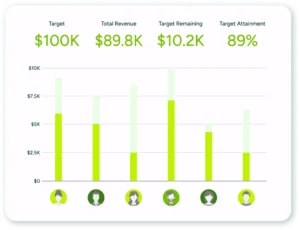
Monitor team and individual KPIs with customizable dashboards for quick access to the most critical metrics
-
Track progress toward sales goals, including deal stages, close probabilities, and forecast accuracy
-
Analyze win/loss data to identify patterns, refine messaging, or shift targeting strategies
-
Spot underperformance early and initiate timely coaching interventions
-
Visualize pipeline health to ensure balanced coverage across short- and long-term deals
-
Share reports with executive stakeholders to align the sales org with broader business objectives
How Maximizer CRM supports sales leadership success
Key features for sales leaders
Maximizer CRM is more than just a tool for tracking contacts it’s an intelligent platform designed to empower sales leaders with insights, structure, and visibility. Whether you’re overseeing a small inside sales team or managing multiple territories, Maximizer offers features built specifically to help you lead with intention and deliver results. At its core, Maximizer CRM supports the essential pillars of sales leadership: coaching, planning, performance management, and communication. It gives leaders the power to see what’s happening on the ground while also helping them stay aligned with strategic business goals. With the right data at your fingertips, you can coach smarter, plan more effectively, and adjust quickly to market shifts.
Key features that help sales leaders succeed include:
-
Custom dashboards that allow you to monitor KPIs and sales metrics at a glance, giving you a real-time snapshot of your team’s performance
-
Advanced reporting tools that help uncover patterns in win rates, deal velocity, and rep productivity so you can make informed, proactive decisions
-
Sales pipeline management that lets you view the status of every deal in play, assess forecast health, and identify where deals are stalling
-
Contact and activity tracking that ensures you have visibility into every interaction, from prospecting calls to follow-up emails, helping you spot coaching moments and engagement gaps
-
Goal tracking functionality that connects daily rep activity to larger sales objectives, reinforcing alignment across the team and keeping everyone focused on outcomes
These tools don’t just help you manage the sales process; they support a deeper level of leadership. By giving you access to the data and insights you need to lead with clarity, Maximizer CRM makes it easier to coach, mentor, and grow your team effectively. Perhaps most importantly, it helps you do all of this without being bogged down by manual processes or scattered information. Instead of guessing what’s going on or reacting to issues after the fact, you can lead with confidence, knowing you’re making decisions backed by real-time, accurate data. Sales leadership today demands agility, focus, and the ability to see beyond the next deal. Maximizer CRM brings all of that into one centralized, powerful platform.
Real-world success stories
Implementing the right customer relationship management (CRM) system can revolutionize an organization’s operations, leading to enhanced efficiency, improved customer satisfaction, and significant growth. Here are two compelling examples of how Maximizer CRM has driven success across diverse industries.
Bahrain international circuit: centralizing data for enhanced engagement
Established in 2004, the Bahrain International Circuit (BIC) is a premier motorsports venue hosting events like Formula 1. As BIC’s operations expanded to include ticket sales, facility rentals, and sponsorships, managing a vast and varied contact database became increasingly complex. Previously, BIC relied on multiple Excel spreadsheets, leading to fragmented data and challenges in tracking customer interactions accurately. This fragmentation hindered its ability to personalize customer interactions and deliver tailored marketing campaigns. To address these challenges, BIC implemented Maximizer CRM to centralize their customer data, improve internal processes, and provide valuable insights across departments. This strategic move enabled BIC to enhance productivity, boost awareness, and fuel growth across key revenue streams. Sales Manager Mr. Bader Nasser noted, “I have always wanted a system that I could report about the whole business from. Since I have used Maximizer, it was nothing but a matter of a few clicks.”
Kyzen: automating processes to improve efficiency
Founded in 1990, Kyzen specializes in environmentally friendly industrial cleaning solutions for high-reliability industries such as aerospace, electronics, and semiconductors. Before adopting Maximizer CRM, Kyzen faced operational challenges due to manual processes for logging sales calls, managing customer data, and processing lab requests. Information was fragmented across various systems, making it difficult to maintain a holistic view of customer interactions and sales activities. Implementing Maximizer CRM transformed Kyzen’s operations by centralizing customer data and automating key processes. The integration of lab requests into Maximizer helped cut completion time by 60%, saving hours annually while improving accuracy and collaboration across teams. Global Product Line Manager Jason Schwartz emphasized, “Maximizer is a cornerstone of our operations. Access to accurate information on our complex sales cycles means we have the insights to drive the business forward.”
These success stories highlight the transformative impact of Maximizer CRM in centralizing data, automating processes, and providing actionable insights, ultimately driving growth and enhancing customer satisfaction.
Take the next step: build stronger sales leadership
Sales leadership isn’t about having all the answers; it’s about asking the right questions, empowering the right people, and staying committed to growth. As the role of sales evolves, the expectations for leaders rise. Today’s sales leaders must be coaches, strategists, analysts, and motivators all in one. That’s why investing in your leadership development and equipping yourself with the right tools is no longer optional. It’s essential. Maximizer CRM can be a key partner on this journey. It supports the competencies outlined in the sales leadership competency framework, from coaching and communication to strategic planning and data-driven decision-making. Whether you’re looking to improve visibility, refine your leadership approach, or simply manage your team more effectively, Maximizer helps you do it with confidence and clarity.
Here’s how to get started:
-
Assess your current leadership style and identify areas for development using a sales leadership competency model
-
Explore the key competencies such as vision setting, adaptability, and data literacy that will help you grow into a more impactful leader
-
Reflect on how you’re supporting your team today, and where tools like CRM software can help you be more proactive, not reactive
-
Look at your existing sales processes and ask: are they helping or hindering performance? Could a CRM like Maximizer bring clarity and efficiency to your leadership style?
-
Commit to continuous improvement, knowing that leadership is not a destination it’s a daily practice
Frequently asked questions: sales leadership
What are the key competencies of sales leadership?
Key sales leadership competencies include strategic thinking, effective communication, coaching and team development, data-driven decision-making, and adaptability to change all focused on guiding teams toward long-term success.
How is sales leadership different from sales management?
Sales leadership is about vision, influence, and developing people, while sales management focuses on processes, targets, and day-to-day operations. Leaders inspire growth; managers ensure execution.
What is the best sales leadership competency model?
The best models outline core competencies like vision-setting, coaching, communication, analytical thinking, and adaptability, providing a clear framework for identifying and developing effective sales leaders.
How can sales leaders improve team performance?
Sales leaders can boost performance by setting clear goals, providing regular coaching, fostering a positive team culture, recognizing achievements, and using performance data to guide strategy.
How does CRM help in sales leadership?
A CRM gives leaders visibility into pipeline health, rep activity, and performance metrics, enabling better coaching, accurate forecasting, and strategic decision-making based on real-time insights.
Subscribe to our Newsletter
Related Articles